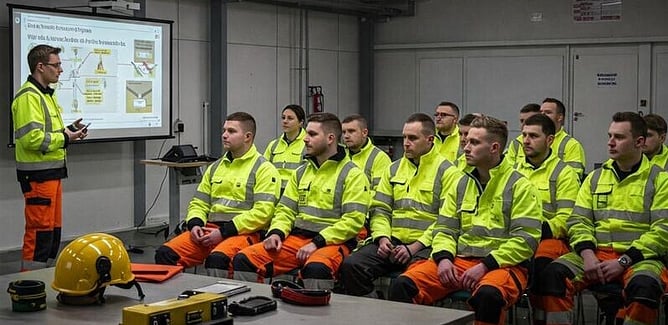
Did you know that many workplace accidents are linked to not-great training? Safety induction is how you can give new workers the safety smarts and skills they need. Do it well, and it sets the stage for a strong competency management framework. However, get it wrong, and you expose your business to risks, including workplace accidents, compliance problems and productivity losses.
Today’s article explores how safety induction is critical for building a safer, more competent workforce that knows what it’s doing.
The link between safety induction and competency management
Competency management and safety induction go hand in hand.
Managing competency is all about making sure employees have the right skills to do their jobs safely. And the process starts as soon as they arrive on-site with a safety induction. Furthermore, a safety induction is also a legal requirement, thanks to the Health and Safety at Work Act 2015.
Safety inductions ensure that all workers are on the same page. They learn how to operate machinery and complete tasks safely. New employees also find out how to identify and deal with workplace hazards.
Skip on skimp on this vital first step, and you’re setting up your whole competency system to fail. And more importantly, you’re also putting workers at risk.
Key elements of a safety induction programme
So, what do best-of-breed safety inductions have in common? Let’s break down the non-negotiables.
Standardised safety knowledge: Inconsistent training can lead to misunderstandings and unsafe practices. A well-structured programme ensures everyone receives the same vital information.
Hazard identification and risk assessment: Promote a safety-first mindset by helping new employees spot dangers at work. Teach them the basics of risk assessment and get them to try it out so the knowledge sticks.
Safe work practices and equipment operation: Demonstrate and explain how to work safely with tools and tasks. And, where possible, get workers involved with lots of hands-on practice.
Keep the content engaging: Use videos, quizzes and interactive elements to keep workers engaged.
Make it role-specific: Tailor the safety induction programme to job roles and site-specific requirements for maximum impact.
Track and verify completion: Keep track of where your workers are at with verifications of competence, certifications and competency tracking tools.
Go digital and reduce onboarding time: Digital induction platforms like CheckSafe allow workers to complete some elements online. They can even be started before the new hire steps through the door, minimising the time to productivity.
Benefits of safety induction and competency management
Investing in safety induction and competency isn’t just about reducing workplace incidents and accidents, critical though that is.
A strong safety culture makes employees feel valued. It’s also an incredible motivator that turbocharges loyalty and retention.
Ultimately, you reap the rewards of lower costs, better work and a strong company brand. And that’s good for all-round business.
The CheckSafe solution
Ready to take the next step in integrating safety inductions and competency management? Sign up for a free demo of the CheckSafe platform. Our easy-to-use digital tool does away with the inconsistency and time-consuming issues associated with traditional, paper-based safety inductions.
Automated and centralised record-keeping with anytime, anywhere access will ensure your workers are prepared, competent and compliant from day one.