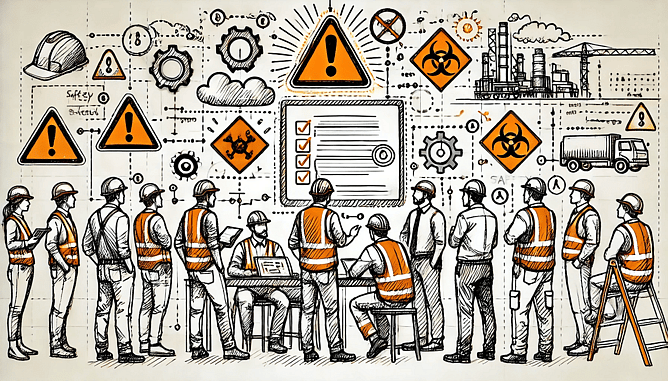
Every business wants workers to go home safely at the end of their shifts. And proactive risk management is the way to go. A reactive approach, where you wait for incidents to happen before acting, can lead to major consequences, including injuries, fines, and production delays. Being proactive means you identify risks early and have strategies in place to minimise them.
Sounds easy, right, but where do you start? Today’s post takes the guesswork out of risk management as we share practical strategies to help you create a safer workplace.
Risk identification and assessment
The first step is to identify and assess potential risks to your operations. This involves conducting regular workplace inspections to evaluate possible hazards.
It also involves checking the competency levels of all your staff, as incidents often occur when there are competency gaps.
Next, assess the likelihood and severity of risks so you can prioritise your mitigation efforts.
Finally, be sure to take a data-driven approach to risk assessment. Use past incidents and predictive analytics to anticipate potential safety issues.
Implement preventative strategies
Once risks and hazards have been identified, it’s time to put control measures in place. Possible examples include the following:
Modifying operations, equipment and processes to eliminate or at least reduce risks and hazards
Developing safety policies, implementing training programmes and verifications of competence to ensure worker safety
Ensuring employees have the necessary tools, equipment and personal safety gear to complete their work safely
Use technology to support risk management
Online risk management tools and platforms like CheckSafe make managing risk a whole lot easier. Real-time reporting, automated audits, online risk assessment and streamlined incident tracking help you stay ahead of potential issues.
Furthermore, comprehensive analytics provide valuable insights. You can use these to help drive continuous improvement in your safety performance.
Building a safety culture
A proactive approach to risk management isn’t just about processes and technologies. It’s also about winning the hearts and minds of your people and building a safety culture together. Here are some ways that you can do just that:
Engage employees by encouraging them to report hazards or safety concerns
Provide regular safety training so employees are updated with the latest best practices and industry regulations
Ensure company leaders set the right tone by prioritising safety in all decision-making and enforcing accountability.
Proactive risk management with CheckSafe
A safer workplace doesn’t just happen by chance. It's built through proactive planning, robust strategies, and the right tools.
However, managing all the moving parts of a proactive approach can be challenging. That’s where CheckSafe comes in. Our workplace health and safety software simplifies risk management. We can help you track, assess, and improve your team's safety performance.
Sign up for a free demo to find out more.
Don’t wait for an incident to take action. Start building a safer workplace today.